Dec 3, 2010

Why are Filipinos such good dancers as can be seen on MTV's ABDC?

Dear Filipino,

Hi again!

First off, your blog is coming along nicely. Secondly (you may have seen this coming), I'm sure you've observed the prevalence of Filipinos in MTV's America's Best Dance Crew. There's a running joke in my family that one aspect of being Filipino is that you have to know how to dance. Any idea why Filipinos happen to be good dancers? Or could you chalk it up to coincidence?

Fil-I-Am
Team Millenia (Source: FilAmFunk Blog)

Dear Fil-I-Am,

Coincidence?  You must be kidding, right?  Surely, you don't believe that!

But for the sake of giving your question some justice, I did some research.  I looked for scientific articles and journals and studies about our physiological traits, our evolutionary history, our genetics.  I consulted astronomical signs and theological treatises. 

Unfortunately, I couldn't find any satisfactory explanation -- until I stumbled upon Anonymous, that is. 

Yes, ma'am: Although often seen now in online forums trolling and spouting bilious and hateful claptrap, the former fount of wisdom known only as Anonymous in the finest books has this to say about dancing:


And voila!  I knew right away this is the explanation I was looking for!  Because if there's one thing the Filipino spirit can do, it is to boogie! 

That's why the Filipinos just shimmy the days away despite corrupt, psychotic and violent political regimes, like the Marcos'.

For the Filipino spirit, even work is of course not an excuse to not shake the Filipino booty!  For instance, if we:

(1)  Need to tell folks about inflight safety rules of an airplane as a stewardess?  We go Gaga!

(2)  Need to direct traffic? No one can top our Manila cops!

(3)  Need to exercise?  We move to the groove!

(4)  Need to raise money for victims of typhoons and floods and massive earthquakes and volcanic eruptions of mythical proportions?  Hey, those are great reasons to cha-cha with a Star or to zumba with our gang!

If some people are out to squeeze or trip us, that won't find us in a pickle!  In fact, we let them try!  But first, we have to take out the parasol and a fan or two, so they can really tickle our fancy!

If we got double-crossed, we don't let that get us all twisted over.  We just do the ocho-ocho -- oh yeah!

And if we're hungry, we just feed our spirit with spaghetti or papaya!

Heck, the truth of the matter is, even prison is not enough to bottle our spirit.  In fact, that's where we channel our inner Michael Jacksons!

Okay, okay.  So I'm exaggerating and stereotyping a bit and I'm getting carried away, because the truth of the matter is: I have two left feet. 

But if you think you can sing, well, awitin mo at isasayaw ko!  Yes, I meant to say, go ahead, sing it and I will dance it!

(BTW, thank you for the "love" you're showering my nascent blog!  I'm feelin' it, kabayan!)

Got a question for The Filipino?  Email him now at askthepinoy@gmail.com.

Dec 2, 2010

Will Filipinos ever be considered a "model" group?

Dear Filipino,

I am a second-generation Fil-Am who attended a reputable college, and I went to school with really smart folks (I didn't think I was any less smart by the way :-p).  I must admit though that I sort of felt "jealous" of the Indians, the Koreans, and the Chinese who many other students (including fellow Filipinos) and teachers considered the smartest and the "model" students.  Now, here's a somewhat "racist" question: Do you think that, as a group, we will ever belong in their ranks?

Chippy-shouldered Pinoy

Dear Chippy-shouldered,

I totally dig your question (it's not "racist" just race-related), but I'm kinda disappointed with it too.  Here's why: Coming from someone like you who supposedly went to a "reputable" college already, does this mean that many other Filipinos "below" your educational stature carry the same "baggage" -- i.e., "jealousy," or maybe, from the very premise of your question, even a sense of "inferiority" perhaps?

But first, let's give credit where credit is due.  I think the reason why US-based Asian Indians, Chinese and Koreans have seemingly outsized rates of representation in Ivy League colleges is because their cultures (at least, from what I can tell from my interactions with them in the US) value education more. Plus, of course, in the case of China and India, they are very populous countries so that naturally, they tend to send more people to US universities for higher education.  And not to diminish their smarts, they shine because, as they say, in China, even if you're one in a million, there's at least a thousand just like you. 

Additionally, the US-based Chinese/Korean/Indian parents, many of whom are recent immigrants and recruited to work in high-tech, push their kids to not be content with just complying with school curricula, so many of their kids also attend after-school tutorial classes, academic camps and what-not.  Yes, they probably know the US educational system is falling behind, so the kids are being asked to aim higher -- which, I think, is the right way to go.  They are also attuned to what's happening back in their own home countries (by this I'm referring to the intense competition to succeed in booming India, China and South Korea); thus, peer pressure among them to excel academically is likewise intense.  This dynamic has its obvious rewards, but like anything, also has its costs. (We don't have to go into this now because that is not part of your question.)

So if we want more academic achievers, we have to do more as a community.  We have to glorify academic achievement with even just a tenth of the passion we employ to glorify Manny Pacquiao's exploits or Charice Pempengco's.  We have to lessen the invidious impact of pop culture by shutting off TVs and monitoring our kids' Internet and cell phone use.  Our kids must be told to prioritize homework before hiphop, cellular chemistry before cellular phones, math book before Facebook.

I do have some US Census stats to make you a little prouder of our community (and which should tell you that we may be underrated as a group).  Here's one about educational attainment (note: click on the images to enlarge):


As you can see, we do fairly well, compared to the other Asian groups in education.  Our college graduation rate is almost double the national rate, and that's admirable. 

And it's important to impart the value of education because there really is a high correlation between education and income, and education and unemployment rate.  Here's one graphical proof:
 

(Source: American Century Blog)
 
And though less clearly shown, here's another proof:


Now, here's the BIG CAVEAT: The data in the immediately preceding graph is old and getting older; newer figures are available on Wikipedia and I'm glad we're faring even better.  But the data actually does not explain other factors affecting household incomes.  For instance, Filipinos are probably making more than the other Asian groups because we are heavily represented in the higher-paying health industry and because we, like Indians, have a better grasp of the English language, which give us an advantage over other Asian immigrants when it comes to landing jobs. (So a quick note to policy-makers in the Philippines: Do NOT water down English instruction in favor of Tagalization under the guise of "nationalism," without regard to the fact that the Philippines has more native non-Tagalog speakers than there are Tagalog speakers.)

But here's one graphic which I think shows that the "model minority theory" is in fact a myth and can be counterproductive and harmful:


As you can see, almost counter-intuitively, the Chinese and the Koreans (and, to a lesser degree, the Asian Indians) have higher levels of poverty compared to national rates -- and about double ours.  And this is why your question  reveals some ignorance or is at least inartful, because, by this measure at least, we, as a community, are not doing too badly even if there's much more need and room for improvement.  Heck, we can even stake a legitimate claim to being a "model group" in this regard.

And these graphs, collectively, is one reason why I don't believe in traditional notions of affirmative action anymore -- the one based on race, national origin or sex.  We are now heading into the second decade of the 21st century, and well past the era of pernicious discrimination and even race-related riots.  Sure, there should be affirmative action, but it should be based on membership in society's lowest economic strata, which unfortunately have been ballooning in size lately in America.  You and I must help to reverse this unwelcome trend, not just for the Filipino-American community but, more importantly, for the country which has benefited us greatly and which we now call home.

Got a question for The Filipino?  Email him now at askthepinoy@gmail.com.

Nov 26, 2010

Are Filipinos considered Asians or Pacific Islanders?

Dear Filipino,

I'm a Fil-Am based in Hawai'i, and I know of Filipino folks who consider themselves "Asians" and I also know others who consider themselves "Pacific Islanders."  What do you think -- what are we really?

Hopeful Hawai'ian

Dear Hopeful,

Check out this video below: Maybe Filipinos are actually Latinos? ;-)


And so that you don't feel bad about your question, check out this next amateur video made by young Filipino-Americans, which shows just how much you're not alone in this confusion when it comes to our identity:


I don't know about you, but I kinda liked the theory of that guy in the video about the Filipino people -- or Pilipino because there is no "f" in Tagalog -- being the "chosen" (pili in Tagalog) and "fine" (pino in Tagalog) people. :-)   Except, of course, that assertion is pure bunk. :-(   And as I said in an earlier post, Filipino is a derivative of "Las Islas Filipinas," the name the Spaniards christened the Southeast Asian archipelago they colonized in honor of King Philip II of Spain.

But back to the question: Are we "Asians" or "Pacific Islanders"?

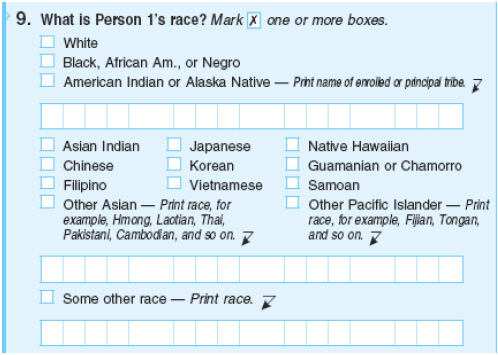
While this question pertains to Filipinos, it is really an American issue because Filipinos in the Philippines are not vexed by this question at all.  Ordinary Americans are honestly confused as to how to classify us (many typically think of Asians as only those from North Asia: China, Japan and Korea), while we, US-based Filipinos, are regularly faced with this "identity confusion" ourselves, at the most basic, when filling out forms which take this data into account. Which box to check? 

More importantly, however, we get confused, even insulted sometimes, when others, favorably or unfavorably, view and lump us with other ethnic groups because of how we look and how they view our culture, or exclude us from the group we think we rightfully belong.  Most importantly, this question bedevils us when we want to reach out to be part of a bigger community with whom we can have a sense of affinity, kinship and pride.  We are conflicted because we seem to be both and neither at the same time.

You have to understand though that the correct classification boils down to the definition of terms.  Are we of the folks who hailed from the same geographic region or of the folks who, generally, ethnically look like or act like us? 

In other words, does "Asian" or "Pacific Islander" refer to geographical provenance?  If it does, we're actually both: because the Philippines is in Asia and it is a group of islands in the Pacific Ocean.  But under this definition, the Japanese would also be both, even if they don't seem to be as contorted as we are by the labels.

Now, if the term "Asian" or "Pacific Islander" refers to ethnicity, then I think both terms are misnomers.  Actually, even if I concede that "Pacific Islander" may be a little more specific than "Asian" and conceivably acceptable as an ethnic classification, there is really no such thing as a single "Asian" ethnicity for the simple reason that the continent of Asia is so big and so diverse.  By this definition, any school kid with the most elementary knowledge of geography would know the term "Asian" would encompass many ethnicities, including, among others, the yellow-skinned North Asians, the dark-skinned South Asians, the brown-skinned Southeast Asians, as well as the Persians, the Arabs and the Turks (who, by the way, also consider themselves Europeans because their country straddles the continents of Asia and Europe).  In fact, it can be argued that "Pacific Islander" is just another subset also of the Asian umbrella of ethnicities.

What exacerbates the issue really for us is that we have never been in the position to define these terms for ourselves.  Thus, even if we do have historical and genetic kinship with the "Pacific Islanders," the US Census defined the term as referring to "people having origins in any of the original peoples of Hawaii, Guam, Tonga, Samoa or other Pacific Islands" and otherwise those "of Polynesian, Micronesian and Melanesian cultural backgrounds."  And said government agency purposefully did not include the "Philippine Islands" as among those "other Pacific Islands."

The term "Asia," on the other hand, is another Western construct -- i.e., "a concept exclusively of Western civilization."  In fact, according to Wikipedia, "the peoples of ancient Asia (Chinese, Japanese, Indians, Persians, Arabs etc.) never conceived the idea of Asia, simply because they did not see themselves collectively," and the term was "first attributed to Herodotus (about 440 BC) in reference to Anatolia or -- in describing the Persian Wars -- to the Persian Empire, in contrast to Greece [Europe] and Egypt [Africa]."

Coming from a heterogeous and polyglot society which has a colorful history of mass migrations (Negritos and Malays) and colonial occupations (by Spain, US and then Japan), the earlier waves of Filipinos who migrated to America became more contorted by racial identity issues because of ignorant and discriminatory American laws in the not-too-distant past.  For instance, in California, a state anti-miscegenation law prohibiting interracial marriage between whites and "Negroes, mulattoes, or Mongolians" had been routinely applied to Filipinos because they were deemed members of the "Mongolian race."  It took a controversial case, Roldan v. Los Angeles County (1933), for Filipinos to successfully argue that Filipinos are actually descended from the "Malay" race (which technically is, of course, not entirely accurate).  However, the victory celebration was short-lived because the ever-reliable California legislature then, unhappy with the judicial decision, quickly responded by adding "Malay" to the restricted races because Filipinos then were viewed as "scarcely more than savages" whose "social problems were based almost entirely on their sexual passion."

This reminds me:  In keeping with the Thanksgiving weekend, I want to say I am just very thankful as a Filipino-American (emphasis on American) that our modern American society has successfully and quite impressively moved on from the ignorant and dark days of the Roldan era.  You want proof?  Look no further than the black (?) man in the White House -- your kababayan, no less! -- who, like many Filipinos, had also spent childhood years in Southeast Asia and who considers himself a "mutt," which most Filipinos are.

Also, I am very thankful that as Filipino-Americans (emphasis this time on Filipino), the US now, increasingly, has better literature and forms with regards to race-related classifications.  By this, I mean, of course, that we now have a checkbox designed just for us:

"Filipino."

Happy Thanksgiving to you and your loved ones!

Got a question for The Filipino?  Email him now at askthepinoy@gmail.com.

Nov 24, 2010

Do Filipinos have their own script and do they still use it?

Dear Filipino,

I once passed by a "Filipino fiesta" near the Moscone Center/Yerba Buena Gardens [San Francisco, CA] and so I checked out some of the booths. I saw these pretty cool shirts being sold with all sorts of weird-looking "characters" -- I mean letters, not people :-) -- which I figured must be from your native alphabet.  Am I right?  If so, what do you call it and does anybody in the Philippines actually still use it?

Thanks in advance for your reply, bud!

Surfer Dude

Yo Surfer Dude!

"Surfer" as in "Internet surfer" or "surfer" as in "California surfer"?  If you're the latter, here's a link for you: The Top 10 Surf Sites in the Philippines as compiled by BISEAN.  Just thought you'd appreciate knowing there's quite a few surfing spots where I was originally from in case you find yourself feeling adventurous one of these days.
Baybayin (from The Bathala Project)

Now, on to your questions. 

You probably saw shirts with these characters found on the image on the left in that fiesta.  It is a writing system called Baybayin and it was widely used in the islands now called the Philippines even up until the 19th century.  More importantly, however, it was THE system of writing well before the Spaniards came and pretty much imposed the Latin alphabet (also called the Roman alphabet) on the natives they subjugated.  As such, some refer to the writing system as a "pre-Filipino" because the term from where "Filipino" was derived, "Filipinas," was itself coined by the Spaniards in honor of their king, King Philip II. (Noteworthy for Filipino Catholics: King Philip II was the son of Charles V, who was crowned Holy Roman Emperor by Pope Clement VII.) 

Mistakenly, others also refer to it as "Alibata," but this term is really a silly modern coinage by a member of the old National Language Institute, Paul R. Verzosa.  Why?  Because the term Alibata is a mash-up of alif, ba and ta, which are the first letters of the Arabic alphabet.  Now, Alibata would probably be fine for people who are fine with formally calling the Latin alphabet as "ABC"; however, the problem in this case is, Baybayin is NOT even based on Arabic!

In fact, Baybayin is a member of the Brahmic or Indic family of scripts, which is not only alphabetic but actually and, more importantly, syllabary in nature: i.e., the letters are actually symbols which represent syllables.

According to Paul Morrow, a respected researcher in the field:

The word baybayin is a Tagalog term that refers to all the letters used in writing a language, that is to say, an “alphabet” – although, to be more precise, the baybayin is more like a syllabary. It is from the root baybáy meaning, “spell.” This name for the old Filipino script appeared in one of the earliest Philippine language dictionaries ever published, the Vocabulario de Lengua Tagala of 1613. Early Spanish accounts usually called the baybayin “Tagalog letters” or “Tagalog writing.”...[T]he Visayans called it “Moro writing” because it was imported from Manila, which was one of the ports where many products from Muslim traders entered what are now known as the Philippine islands. The Bikolanos called the script basahan and the letters, guhit.
Now, here's the interesting part (for me at least):  Although I earlier mentioned that Baybayin was actually used by the natives up until the 19th century, implying thereby that it died, the alphabet is actually "being resurrected thanks to young soul searching Filipinos," according to Christian Cabuay of Baybayin.com.  This is especially true among the Filipino-Americans raised in the US, who seem to be yearning for meaningful cultural ties to their ancient forebears.  Hence, I think you will increasingly see not only Baybayin-inspired shirts in Filipino fiestas but also real "Filipino characters" with tattoos of the weird characters you mentioned, like this lady for instance:

Baybayin Tattoo (from pinoytattoos.com)
Now, The Filipino is not really too keen on tattoos, but he kinda likes this picture. ;-)

Got a question for The Filipino?  Email him now at askthepinoy@gmail.com.

Nov 19, 2010

The Mexican asks: How much Spanish remains in Filipino languages?

Dear Filipino,

How much Spanish remains in Tagalog or any of the other Filipino languages?  Whenever I'm enjoying my pansit bihon with lechon and the turo-turo joint is broadcasting some Pinoy show on the television, I can't concentrate because the sprinkling of Spanish makes me feel like I should know what everyone is saying!

The Mexican

The Mexican

Dear Mexican Dear Idol,

First of all, thank you very much for your email and question!  The Filipino is honored -- no, make it extremely honored and grateful! -- that you've written to encourage him to keep up this blog, which was inspired in the first place by your "Ask a Mexican!" column!

[NOTE: This and the next few paragraphs, which are enclosed by the brackets, are not for you, Idol, but for the uninitiated.

A Filipino turo-turo joint, or a carinderia, is a local eatery which serves inexpensive home-cooked meals and is typically characterized by a very informal ambience: i.e., no reservations required, no uniformed waiters at your beck and call, no fancy fixtures, et cetera.  The root word, turo, is a Tagalog word which means "to point," so patrons of a turo-turo joint usually just point from an array of heated but earlier-prepared viands to order their desired meals (although generally they are also able to order a la carte meals at higher price points). 

Pancit bihon is a popular Filipino noodle dish and lechon is a pork dish.  See the below photos for reference:
Pancit Bihon (from wokwithray.com)

Lechon Kawali (from wokwithray.com)
Just looking at the pictures make me salivate, but enough with this aside and on to The Mexican's my idol's question. ;-) ]

The Pinoy television show you were watching was probably in Tagalog, which is the language of the people from the provinces in and around Metro Manila.  It was made the national language in 1937 and renamed Pilipino in 1939. 

There are several good reasons why, whenever you're eating at the turo-turo joint, you feel you should be able to fully understand (but maybe don't) what the Filipinos on TV are talking about.  They are as follows:
  • There are an estimated 4,000 Spanish words in Tagalog, or about 20-30% of Tagalog words while Visayan and other Philippine languages borrowed about 6,000 Spanish words.  But then dig this: Chavacano, which is spoken in Zamboanga, is actually the only Spanish-based creole language in Asia. (So I'm not entirely sure here, but I'm guessing you can probably survive in Zamboanga speaking only Spanish!)
  • With slight changes in spelling and pronunciation, Pilipino incorporated the Spanish terms for counting (uno, dos, tres...), telling time (a la una y media?), the calendar (Enero, Pebrero, Marso...), days of the week (Lunes, Martes, Miyerkoles...), among others.  
  • Spanish has developed "false friends" in Tagalog and in the other Philippine languages.  These are the related words which started out from the same starting point but -- probably because of local usage/application, loss of nuance, or outright misuse -- have developed different meanings with the passage of time (e.g., kontrabida, which is from contra vida, meaning "against life," is now Tagalog for villain).
  • Of course, there are also a lot of "false cognates" -- similar words in Spanish and Tagalog that appear to have a common origin but actually do not (e.g., ama is Tagalog for father but Spanish for housewife).  (I think another good example is the word recently used by Brandon Rios to describe Pacquiao: puto, which is a popular steamed rice cake in the Philippines, but is not exactly a term of endearment in Spanish.)
  • Then, there are the Tagalog words which the Spaniards incorporated into their own language, too (e.g., dalaga, palay, bolo, etc.)
  • And here's the most interesting as far as you and I are concerned: Because the Philippines was directly under the Viceroyalty of New Spain, which was created to administer Spain's far-flung colonies including those in the Spanish East Indies and which was headquartered in Mexico from 1565 to 1821 (until Mexican independence), there was an active Manila-Acapulco galleon trade which allowed many native Mexican words, such as those from the Nahuatl, to creep into Philippine languages (e.g., sayote from chayotl, kamote from camotl, etc.).
Despite the departure of the Spaniards in 1898 from the Philippine archipelago, Spanish remained one of the official languages in the Philippines until 1973.  And in fact, it was still a required subject in colleges across the country until 1987.  Unfortunately, however, except for a few thousand words which became part of the daily Philippine lexicon, The Filipino did not really learn it enough to be able to really converse in the language.

Thanks again for your question, Idol!  Mabuhay ka! ;-)

Got a question for The Filipino?  Email him now at askthepinoy@gmail.com. 

Who are those Filipino backup singers for Justin Bieber?

Dear Filipino,

I saw Justin Bieber on Saturday Night Live one time and he performed with a young group of Filipino guys. Who are they?

Thanks,
Kurious

Dear Kurious,

They're Micah Tolentino, Chris Abad, Delfin Lazaro and Dominic Manuel -- members of the San Francisco Bay Area R&B group called Legaci. The New York Times featured the group in an article entitled "Unexpected Harmony," calling them "the most visible yet invisible pop figures in the world."

Actually, they were already YouTube "stars" in their own right when Scooter Braun, the manager of Justin Bieber, saw their rendition of "Baby," which they performed together with Vietnamese-American singer Cathy Nguyen and the rapper Traphik. Here's the video:


Got a question for The Filipino?  Email him now at askthepinoy@gmail.com.

Nov 18, 2010

The Frenchman asks: Why do young Filipinas marry old French men?

Hi Filipino,
 
It seems that the only encounter one will have with Filipinos in France will be women that married much older Frenchmen. I remember hearing a lot of about it 15-20 years ago, there were agencies that would set up Frenchmen with Filipino women, and usually those men would do that because they couldn't really find a woman in France (either because they lived in remote rural areas, or worse, because they were jackasses and no women wanted to be with them) and they'd use those agencies. Those men had no interest in the Philippines as a country or a culture, they just knew they could easily find a wife there.

I've never personally met such a couple, and I'm definitely not saying that it is the case for every Frenchman/Filipino woman couple, but every time I run into such a couple they leave me that strange and unhealthy impression that they don't love each other. It feels that for the man, the woman is his own personal prostitute/maid/you-name-it and for the woman it seems like a way to fulfill her unrealistic dream to live in France (and once she realizes that France is not that fairy tale country she dreamed about, once past the disillusion, she stays anyway because it's either that or back to poverty).

On the one hand, I understand that some people in poor countries will go to certain extremes to escape that poverty (and I know all too well what African people have to go through to try to get a better life in Europe), but on the other hand, I can't really understand the logic of those women, and especially the fact that it became a more than anecdotic phenomenon a little while ago. I'm not sure about the current situation with this issue though, but I know that among the infamous "I met a French man online does he love me?" questions I get for my blog, a big share of those are from Filipino women.

Could you expand from the Philippines side of the story?

Thanks,
Frenchman

Dear Frenchman,

When I started this blog, I was hoping, naively, that I could shed more light on the positive aspects of the Philippines and its people.  I was not really expecting to answer questions relating to "affairs of the heart," as I felt, thought and believed I was not only ill-equipped to answer them but also because the general subject matter is often too complicated, too intense, and -- especially in the situation you described -- too fraught with perils: i.e., the perils of over-simplification, broad strokes, prejudiced observations, unfair generalizations, condescension, racism, classism, defensiveness, and even hate.  In fact, for a second or two after reading your question, I even had this overwhelming desire to curse the heavens, the corrupt Philippine officials who've long been causing misery to millions, and yes, those Frenchmen you described with less-than-sincere intentions, on behalf of these Filipino women.

But since you asked, I figured I'd tackle this thing head-on, hoping that in the process I can somehow contribute to your and others' understanding (hopefully better and more humane) of these relationships.  Who knows? Maybe somewhere along the way, writing this answer may end up being cathartic too for me, enough at least to lessen the urge to lash out.  I hope that if I end up causing offense to anyone who gets to read this, he/she will forgive me for my attempt, albeit lame, to articulate something positive about something so complicated and, for most, is better off not talked about.

First, let's look at the ideal situation. I think a "typical" middle-class Filipina is like any "typical" middle-class Western woman:  she wants to marry a man who she really loves, who's in the same age group, decent-looking, fun, educated, has good character, in good financial standing, makes her feel good, and shares her cultural background.  I think, for a Filipina, that last characteristic typically means she would rather marry a Filipino instead of a foreigner -- assuming, of course, that everything else is equal. No data on this is available, of course, but I think, even in the United States where Filipinos have much higher rates of inter-marriage, a very high percentage of beautiful, well-traveled, highly courted Filipinas still end up marrying Filipinos.  In other words, like other races, generally, the Filipino people stick to their kind.

But we're not exactly talking of ideal situations when we're talking of young Filipinas marrying old, French men from "remote rural areas" who are "jackasses" and who these Filipinas hardly know and whose intentions and feelings these women are quite unsure of (enough at least to write you), are we?

In fact, if I have to hazard a guess (again, the following description is, by necessity, a simplication of a data set; is in no way comprehensive; and is subject to countless exceptions), the main characteristics of the Filipinas you described in your question are: (1) they are generally from very poor families; (2) they are generally not really highly educated; and (3) rightly or wrongly, they are generally considered not attractive or desirable enough by wealthier, more educated Filipino men who, again, rightly or wrongly, want to be understandably perceived as having made a "great catch" in their chosen partners by society. 

Now, add to the above the fact that (1) there are more women than men in the Philippines (numbering more than 50 million out of a population of roughly 100 million); (2) many of these poor women are not exactly looking to get even poorer by marrying unemployed Filipino men in worse financial straits than they are; and (3) these women are so family-centered, so conscientious and overly eager to do almost anything to improve the lot of their immediate relatives -- and you have a perfect recipe for disaster and, um, exploitation, right? 

Or is it?  And secondarily, even if it's so, who's exploiting who?  The objective answer is: It depends. That's why this line of questioning is really like a Pandora's box, isn't it?

You are right about one thing though: the poverty issue is a leitmotif in these types of relationships between French men and Filipina women.  All over the world, that is the same issue which explains why Ukrainian "Natashas" are feeling compelled to leave their country only to land in less-than-ideal situations abroad; why the "Romas" are being thrown out of France; why Mexicans routinely risk their lives to cross the US borders; et cetera.  But when you think about it, even in the history of Europe, it's the same consideration which drove European kingdoms to marry off even their princes and princesses to undesirable partners.  It's also the same consideration why young and gorgeous European women fall in the arms of Berlusconi, or maybe even Sarkozy.  I guess you can say the story of Anna Nicole Smith, while extreme, is really not that unique.

I don't know the numbers behind these inter-marriages.  I don't even know if the numbers are big enough to warrant a broad-stroke explanation.  But assuming the premise of your question is indeed supportable by hard data, and following a cursory research I made online and the personal conclusions I derived therefrom, one can actually make the following arguments:

(A)  Excepting those who've been illegally forced into these types of relationships, these poor, uneducated Filipinas are actually very smart because they've shown they can make rational economic decisions.  They know they have their youth, desirability, and wifely services to offer, so they use them as perfectly understandable "bargaining chips."  They marry white, old French men because "white" means the guy is probably rich; "French" means the guy is probably bearably nice enough (men from other cultures are reputed to be much worse); and "old" means the guy is probably close to dying.  In other words, for the Filipina in these types of relationships, the marriage is an "investment" in the future for herself and her relatives in the Philippines -- or you can say, at the very least, a form of "delayed gratification," i.e., a way of paying short-term pain in return for long-term gain.  Whether the "reward" from the "investment" pans out or not, the "risk" of continuing to live in abject, grinding and subhuman poverty back in the Philippines is at least minimized.  While, as a matter of survival and psychological fortification, many of them probably still hold out the hope that they will still "live happily ever after," I don't believe most of these Filipinas are really thinking of French fairy tales when they marry their French beaus.  (The takaway here: Don't feel too bad for these Filipino women!)

(B)  Many of these French men, like you mentioned, are really quite undesirable to French women too, deservedly or undeservedly.  But if they have something to offer in a matrimonial bargaining table, why should they not be allowed to seek other women elsewhere?  I don't think these men are so clueless as to think the women are after their French looks.  But then again, maybe they're actually the ones influenced by romantic French fairy tales, not the women?  (The takeaway here: Don't be too harsh on these French men!)

(C)  Believe it or not, many of these relationships actually work, producing healthy and beautiful offspring who end up enriching our increasingly globalizing world.  Why?  Because French men (or generally Western men) are used to aggressive French (Western) women, while Filipinas are generally, because of their culture, more subservient, more deferential to their male counterparts.  Thus, I think many of these Western men are actually surprised and feel fortunate (they should!) that they married women who, being devout and religious Catholics, are devoted to making the relationship work, are quite caring, and, often, were still probably virgins when they first came in contact with their matrimonial beds (Philippine society, being under the heavy influence of the conservative Catholic Church, generally still frowns upon premarital sex, especially in the provinces).  So, quite understandably, these men are pleasantly surprised and extremely grateful to high heavens for landing what ended up as better marital lives than those of other people they know. For their part, the Filipinas, who had earlier probably braced themselves for ugly marriages, end up getting grateful partners, enjoying a higher quality of life, and being able to help their relatives back home, which redound to their sense of accomplishment and joy.  (The takeaway here: Maybe we should be happy for these couples!)

With (A), (B) and (C) to make as arguments, exploitation becomes a non-issue, right?  But then, ever the romantic, you ask (and cue the music), "what about love?" 

Well, to be realistic about the whole thing, most of these types of inter-racial relations you mentioned are actually, or at least akin to, "arranged marriages," not "love marriages."  But I think any successful Indian who is happily married via an "arranged marriage" will tell you that a "love marriage" is overrated.  For one, "love marriages" have much higher divorce rates than "arranged marriages" due to various reasons, the simplest being that couples who bind themselves via the latter setup come into the arrangement with eyes and minds wide open and with the natural commitment to make things as beneficial to the parties as possible.  In other words, an "arranged marriage" addresses "personal needs" of the couple while a "love marriage" often is too consumed with "personal desires."  Inevitably, where needs are met, love creeps into an "arranged marriage," leading to a stronger and happier relationship; on the other hand, where desires dissipate and needs remain unmet, love escapes from a "love marriage" and with it follows the ruination of a shaky relationship.

To end, I just want to wish you happiness, Mr. Frenchman, and blissful days spent with the woman you love and who loves you just as much, regardless if she's French, German or -- dare I say it -- even a Filipina.

Got a question for The Filipino?  Email him now at askthepinoy@gmail.com.
Related Posts Plugin for WordPress, Blogger...